
What is Bursitis?
What is it?
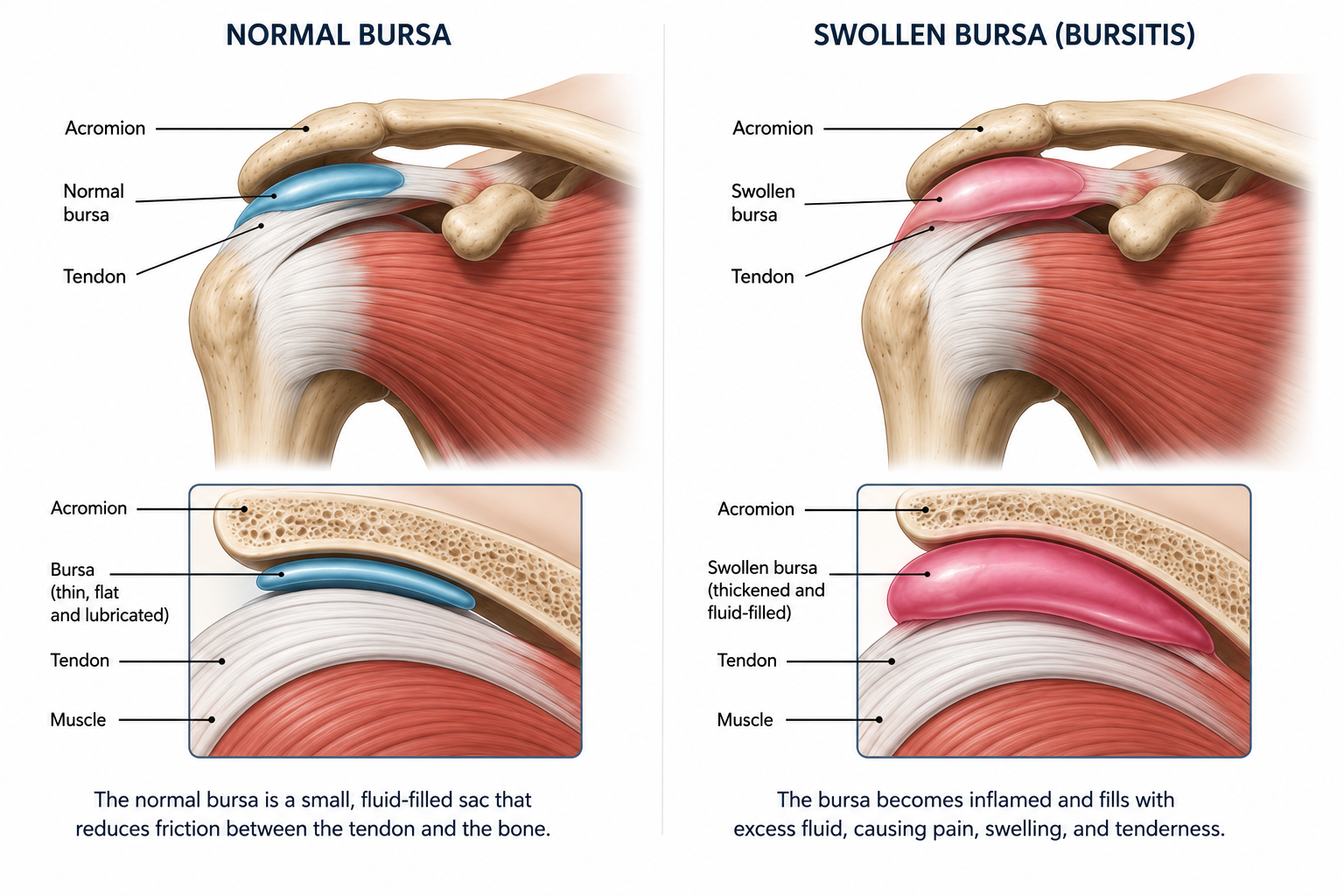
A bursa is a small, fluid-filled cushion that sits between bone and soft tissue. There are bursae throughout the body – the most common spots that get irritated are the shoulder, hip, knee, elbow and heel.
Bursitis means a bursa has become irritated and a little swollen. Think of it like a warning system. It usually happens when nearby tissues are overloaded or compressed – for example with a sudden change in training, repeated kneeling, or prolonged side-lying. The bursa is rarely the only problem; it is usually a sign the area needs help.
What helps the most
• Settle the irritation – short-term relative rest from the most aggravating positions (deep kneeling, heavy overhead lifting, lying directly on the sore side). Over the counter anti-inflammatory medication can also significantly help.
• Ice for 10–15 minutes after activity in the first few days can be useful for comfort.
• Strengthen the muscles around the joint is important once pain has settled. This is the part most people skip. Stronger muscles share the load and reduce repeated compression of the bursa.
• Gradually return to your normal activities, increasing volume and intensity step by step.
• Cortisone injections can help if pain is severe and limiting rehab – but on their own they do not change the underlying cause so need to be combined with a good rehab plan.
When to seek further advice
· A red, hot, very swollen bursa with fever – may indicate infection (urgent care)
· No improvement after 6–8 weeks of consistent rehab
· Severe loss of strength or function
How we can help
· At Elite Performance Physio we focus on finding the true source of your problem, not just chasing symptoms. Your plan combines hands-on treatment, education and a tailored exercise program built around your goals – so you get back to doing what you love, stronger than before.
· We can do capacity and strength testing to see exactly how far away your strength is, giving you a more accurate indicator of recovery time.
· We can use dry needling and cupping for effective pain management.
· If you are under a PT or do classes we can work with your coach to edit your program and keep them informed.
· So whether your exercise choice is strength, running or even pilates, we make rehab fit in with what you have access too.
