
FAI - Hip Impingement Explained
What is it?
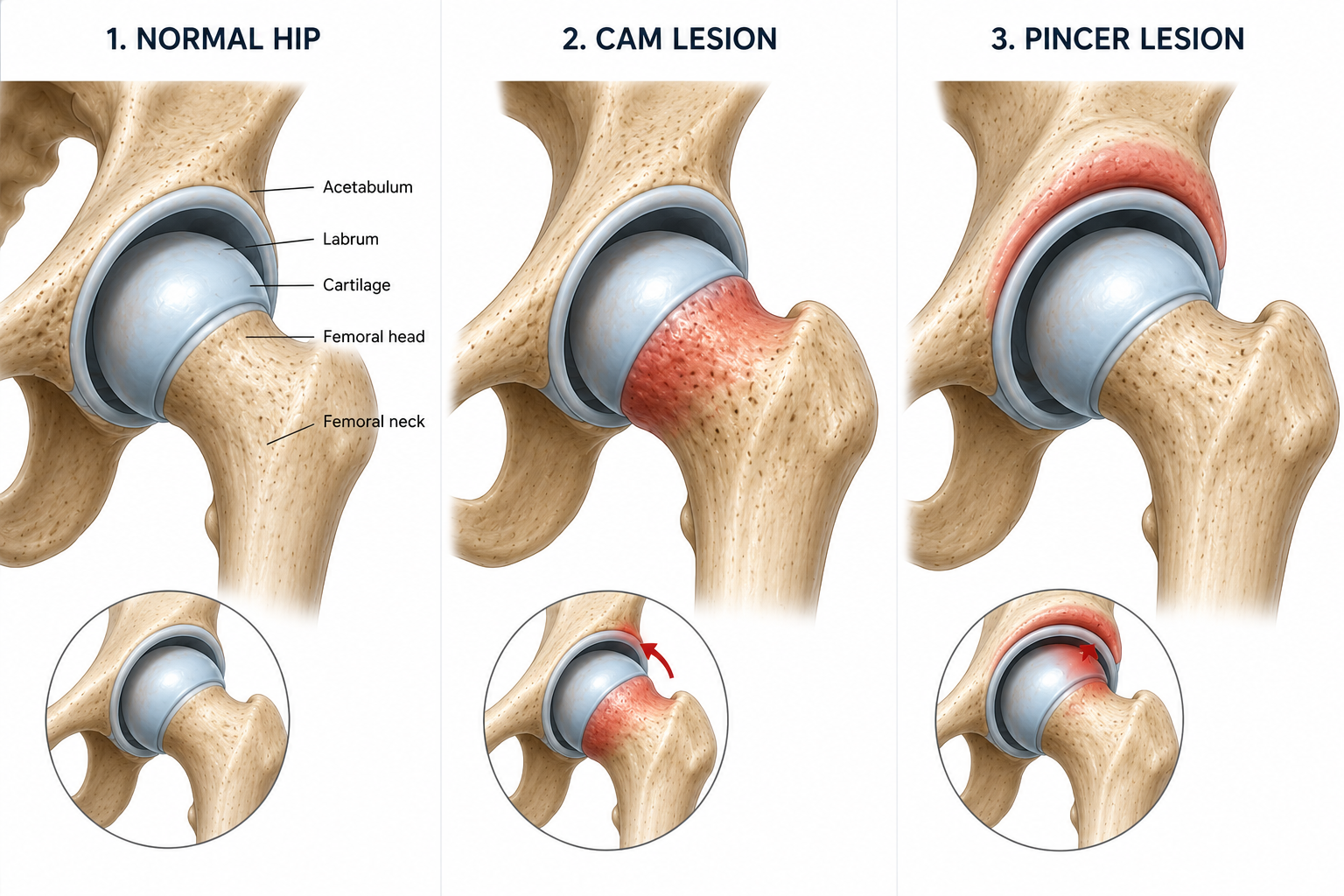
To be diagnosed with FAI (femora-acetabular impingement) you have to have a symptomatic hip. We often find patients have some bony changes - there is a slight extra bit of bone on the ball (cam), the socket (pincer), or both. But just having these does not mean you have FAI. With deep bending, squatting or twisting, this can pinch the cartilage, the labrum or these bony changes and cause pain in the front of the hip or groin.
Many people have these bony shapes and never have pain – they are common in active people. FAI becomes a problem when the hip is asked to do too much, too quickly, or when the muscles around it aren’t sharing the load well. But with proper rehab we can ease symptoms, and most people do not need surgery to improve.
What helps the most
• Conservative care first. Current evidence supports physiotherapy as the first-line treatment – most people improve significantly without surgery. This might include soft tissue release, joint mobilisations, lots of education and medication advice.
• Targeted strengthening. Glutes, deep hip rotators, hip flexors and trunk muscles – strong hips control the joint and reduce pinching.
• Modify the movements that flare it. Temporarily avoid very deep squats, low chairs, sitting cross-legged or hip-rotation drills until symptoms settle.
• Restore mobility carefully. Stretching into the painful pinch usually doesn’t help – we work around it and rebuild range with control.
• Surgery is an option if a structured rehab program (typically 3–6 months) hasn’t worked and imaging fits the picture.
When to seek further advice
· Hip pain following a significant fall or trauma
· Inability to weight bear, or sudden locking / giving way of the hip
· Fevers, night pain, or unexplained weight loss
· Intense pain that doesn’t ease with basic medication after 5days
How we can help
· At Elite Performance Physio we focus on finding the true source of your problem, not just chasing symptoms. Your plan combines hands-on treatment, education and a tailored exercise program built around your goals – so you get back to doing what you love, stronger than before.
· We can do capacity and strength testing to see exactly how far away your strength is, giving you a more accurate indicator of recovery time.
· We can use dry needling and cupping for effective pain management.
· We provide weekly programming (similar to a PT) to monitor your exercises without the need for face to face.
· If you are under a PT or do classes we can work with your coach to edit your program and keep them informed.
· So whether your exercise choice is strength, running or even pilates, we make rehab fit in with what you have access too.
