
What is Discogenic Lower Back Pain?
What is it?
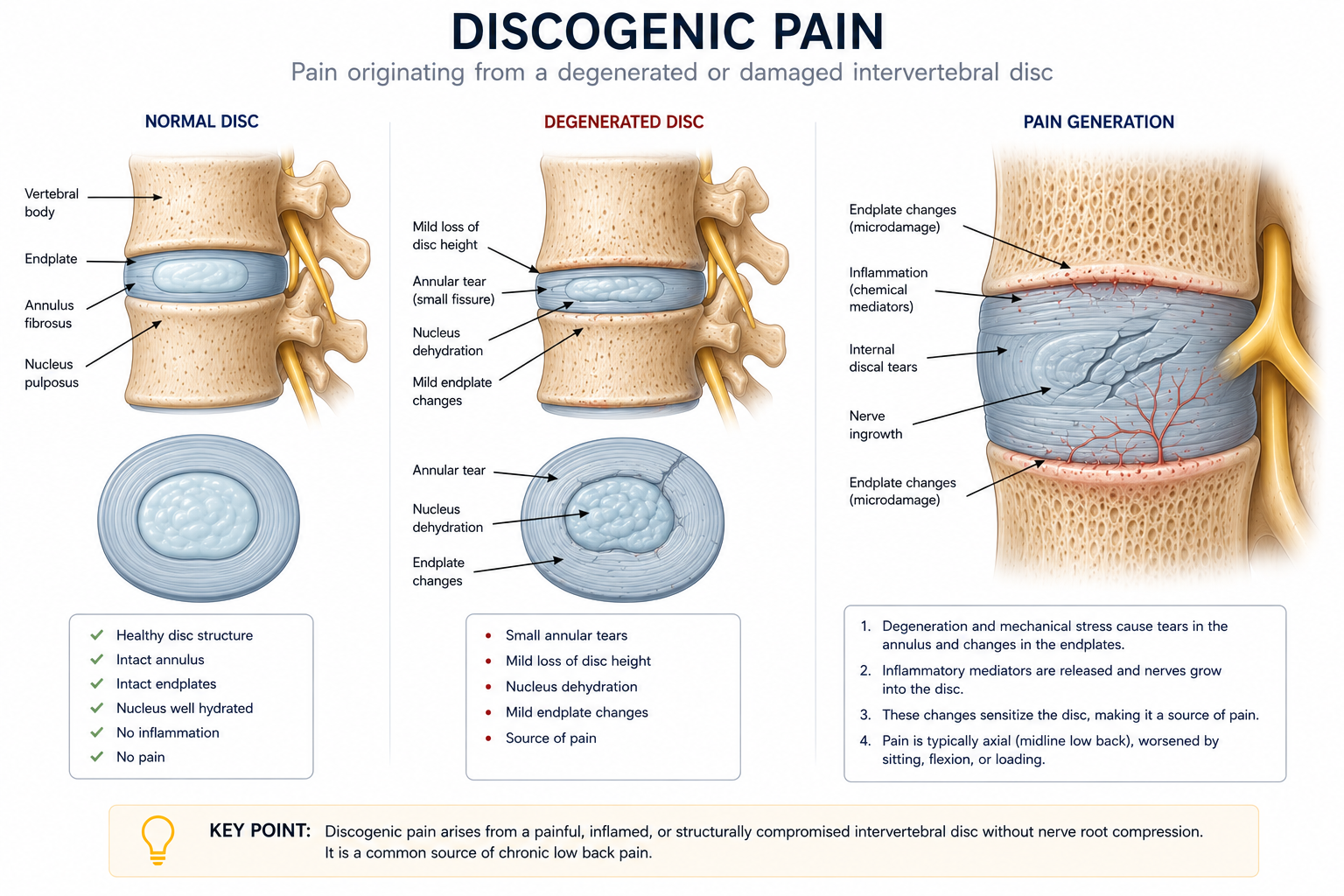
Between each vertebra of your spine sits a disc – a tough cushion that absorbs load and lets you bend and twist. “Discogenic” pain simply means pain that appears to come from one of these discs.
It often starts after lifting, bending or a sudden change in load, but can also build up gradually. Pain may be central in the lower back, or refer into the buttock or leg if a nearby nerve is irritated.
Discs are strong, well supplied with nutrients and have a real capacity to settle and heal just like the rest of the body. It’s important to remember this, as there is a lot of scary information out there regarding them.
Same as other injuries, there is a continuum of change so care can be very different.
What helps the most
• Keep moving. Gentle, frequent movement – walking, easy mobility – settles symptoms faster than bed rest.
• Find positions that ease the pain (often standing tall, lying on your back with knees supported, or gentle backward bends) and use them through the day.
• Don’t panic – being fearful of movement can increase the level of spasm and discomfort, creating secondary symptoms.
• Medication can be helpful to bring down symptoms, especially if pain is inflammatory.
• Build strength gradually. Trunk, hip and leg strengthening reduces the load on the disc and lowers the chance of recurrence.
• Pain doesn’t equal damage. Imaging often shows disc “bulges” in pain-free people; findings on MRI rarely change what we do which is why we might not suggest imaging in the first place.
• Most episodes settle within 6–12 weeks with the right plan, even if a nerve is involved.
When to seek further advice
· Loss of bladder or bowel control, or numbness around the saddle area – seek urgent medical care
· Progressive weakness in the leg or foot drop
· Unexplained weight loss, fever, or pain that is severe at night and unrelieved by position
How we can help
· At Elite Performance Physio we focus on finding the true source of your problem, not just chasing symptoms. Your plan combines hands-on treatment, education and a tailored exercise program built around your goals – so you get back to doing what you love, stronger than before.
· We can do capacity and strength testing to see exactly how far away your strength is, giving you a more accurate indicator of recovery time.
· We can use dry needling and cupping for effective pain management.
· If you are under a PT or do classes we can work with your coach to edit your program and keep them informed.
· So whether your exercise choice is strength, running or even pilates, we make rehab fit in with what you have access too.
